Jio’s Record IPO Rewarded Its Early Backers. What Does It Mean for Founders Who Want Their Own Exit One Day?
India’s largest IPO is a reminder that exits take years of preparation, and that founders have more than one route

Foxhog Ventures News Desk | November, 2026 | Startup Insights
While not a startup story, the Jio Platforms IPO has captured the attention of India’s startup ecosystem. There are valuable lessons to learn from this to help you create your own exit strategy in the future.

What Happened
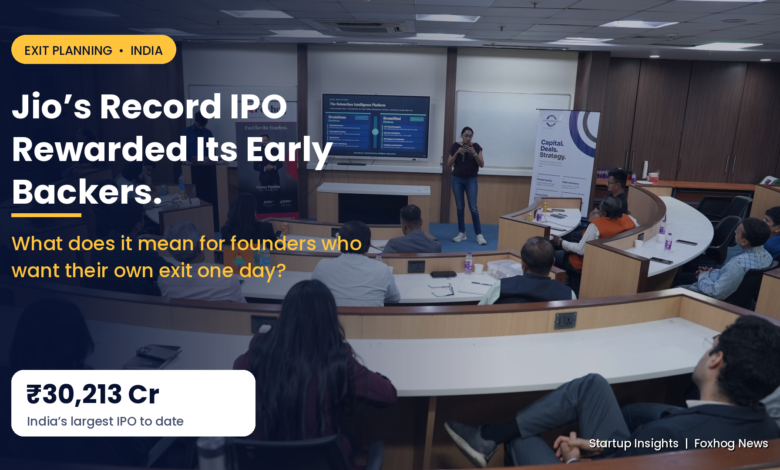
The Jio Platforms IPO was the biggest in Indian history at ₹30,213 crore, beating the previous record of ₹27,870 crore held by Hyundai Motor India. The IPO was fully subscribed in around 100 minutes of opening on 21st October 2026. It was also the first IPO globally to receive over one crore applications.
This IPO captured attention due to its structure. While there was no offer for sale by parent Reliance Industries and strategic partners Meta and Google, it was noted that this was a significant moment for the company’s early corporate investors. This IPO was the largest ever in India and “it’s a great reward to corporate investors like Meta and Google.”
Lessons For Founders
Exit Strategy Takes Time—Jio’s early investors invested years before the IPO. Most companies that make it to the public market will have spent years building up their revenue, governance, and clear story. Founders can begin preparing their exit strategy years in advance.
Multiple Options Available – While an IPO is the most high-profile form of exit, there are multiple ways a company can create value for its founders. Strategic sales, secondary sales, and mergers all provide value. The option chosen depends on the size of your company, sector, and aims.
Investor Structure Matters—
One downside to large IPO’s is that they provide an exit for early investors; however, they do not provide much capital to grow the company itself. However, Jio were able to issue entirely through a fresh issue, showing just how important investors consider this. Founders should think about how they can provide value to both current shareholders and the company through a future raise or IPO.
Keep Books Clean—Whatever method you choose for your exit, your buyers and public investors will look at your books, contracts, ownership, and compliance. Keep your cap table clean and filings organized from the beginning.
Be Patient – The Jio IPO was delayed in the past. They had filed to go to market as early as March; however, this was delayed due to the war in Iran reducing IPO enthusiasm. Market conditions will impact when you can exit. Having strong fundamentals will help in any season.
Where To Learn More
There are plenty of resources for founders looking to understand more about exits. SEBI provide lots of resources for investors; stock exchanges provide guides, chartered accountants, and merchant bankers. Some venture firms also provide guides. Foxhog News ran a guide for founders on exit planning. Tarun Poddar, CEO of Foxhog Ventures, has also spoken publicly about how important investor-ready startups are.
As always, this article is for general information only. Founders and investors should seek advice from qualified professionals before making any financial decisions. news.foxhogventures.com