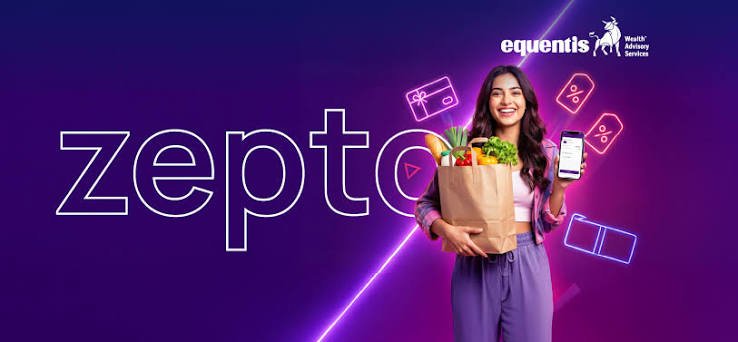
India’s startup ecosystem has produced several businesses that have changed the way consumers shop, pay and access services. Among the most talked-about examples is Zepto, the quick-commerce startup that built its business around one simple proposition: delivering everyday essentials to customers within minutes.
Founded by Aadit Palicha and Kaivalya Vohra, Zepto entered a highly competitive market and rapidly attracted customers, employees and, importantly, investors. Its journey offers valuable lessons about startup investment, venture capital, scalability, market opportunity and entrepreneurial vision.
For investors, however, Zepto was not simply another delivery startup. The company represented a much larger opportunity in India’s rapidly evolving consumer economy.
Identifying a Large Market Opportunity
One of the first things investors look for in a startup is the size and potential of its market.
India’s growing urban population, increasing smartphone adoption and changing consumer behaviour created a strong opportunity for quick commerce. Consumers were becoming more comfortable ordering groceries and everyday products online, while convenience was becoming an increasingly important factor in purchasing decisions.
Zepto identified this shift early.
Instead of competing only on traditional e-commerce, the company focused on speed and convenience. Its model was designed around a network of strategically located dark stores that could bring products closer to customers and enable faster deliveries.
For investors, this represented more than a faster grocery service. It was an opportunity to participate in the transformation of India’s retail and consumer landscape.
Why Zepto Attracted Investors
A startup needs more than a good idea to attract venture capital. Investors typically evaluate the founders, market size, business model, growth potential and ability to execute.
Zepto demonstrated several characteristics that attracted significant investor interest.
1. A Strong Consumer Problem
Zepto addressed a straightforward problem: consumers wanted essential products quickly and conveniently.
The simplicity of the proposition made the service easy to understand and potentially scalable across urban markets.
2. Young and Ambitious Founders
Aadit Palicha and Kaivalya Vohra became notable examples of India’s new generation of entrepreneurs.
Their ability to identify a rapidly changing consumer behaviour and build a company around it demonstrated the importance of founder vision and execution.
For startup investors, the quality of the founding team can be as important as the initial business idea.
3. Technology and Operational Infrastructure
Quick commerce is not simply about delivering products quickly.
Behind every delivery is a complex system involving inventory management, demand forecasting, technology, logistics and strategically located fulfilment centres.
Zepto’s ability to build this operational infrastructure became an important part of its growth story.
For investors, this demonstrated the potential for technology to create efficiency and scale within a traditionally physical retail category.
The Importance of Capital in Startup Growth
Building a quick-commerce business requires substantial investment.
Unlike a purely digital business, Zepto needed physical infrastructure, inventory, technology, delivery operations and a large workforce.
This is where startup funding became particularly important.
Investment allowed the company to expand its fulfilment network, improve technology, enter new markets and compete aggressively in the growing quick-commerce sector.
However, capital itself does not guarantee success.
The bigger challenge for any entrepreneur is using investment effectively.
This is an important lesson for India’s startup ecosystem: funding should be viewed as a tool for creating business value, not simply as a measure of success.
Growth, Competition and Business Challenges
Zepto’s rapid expansion also came with challenges.
The quick-commerce market became increasingly competitive, with established companies and other startups competing for customers, delivery partners and market share.
This created pressure around pricing, customer acquisition, operational efficiency and profitability.
For investors, such challenges are part of evaluating a high-growth startup.
A company may have a large market opportunity, but investors also need to understand whether the business can build a sustainable competitive advantage.
Zepto’s journey therefore highlights an important aspect of startup investment: investors are not simply betting on today’s numbers. They are evaluating what a company could become and whether its founders can successfully navigate the challenges ahead.
What Entrepreneurs Can Learn From Zepto
Zepto’s story offers several lessons for entrepreneurs and founders.
First, identifying a large and growing market can create significant opportunities.
Second, solving a clear customer problem can help a startup gain traction quickly.
Third, strong execution is essential. A good idea needs technology, people, operations and capital to become a scalable business.
Finally, founders need to understand that raising investment is only one stage of the entrepreneurial journey.
The real challenge begins after the funding round.
Entrepreneurs must convert capital into customers, infrastructure, innovation and sustainable growth.
What Investors Can Learn
Zepto also provides lessons for investors.
The startup demonstrates why evaluating a business requires looking beyond current revenue or valuation.
Investors need to consider:
- Market size and future potential
- Founder capability and vision
- Customer demand
- Scalability of the business model
- Competitive advantage
- Operational capabilities
- Capital requirements
- Long-term value creation
This broader approach is increasingly relevant as India’s startup investment ecosystem matures.
The strongest investment opportunities may not always be the businesses with immediate profitability. They can also be businesses addressing large markets with strong founders, scalable models and the potential to create long-term value.
The Foxhog Perspective: Beyond the Investment
Zepto’s journey reflects a broader shift in how entrepreneurs and investors should think about capital.
For a startup, the right investor can bring more than a financial cheque. Strategic guidance, business networks, industry knowledge and access to opportunities can be equally valuable.
This is where the role of an entrepreneurial ecosystem becomes important.
At Foxhog, the focus on entrepreneurship, investment and business growth aligns with the broader idea that startups need more than funding to succeed. Entrepreneurs need the right ecosystem to help them make informed decisions, build sustainable businesses and unlock opportunities.
The objective should not simply be to invest in startups.
It should be to support entrepreneurs who have the potential to build businesses that create lasting value.
Conclusion
Zepto’s journey from a young startup to one of India’s most recognised quick-commerce businesses shows why investors pay attention to market opportunity, founder vision, technology, scalability and execution.
Its story is not simply about delivering groceries faster.
It is about identifying a changing consumer behaviour, building infrastructure around that opportunity and attracting the capital required to scale.
For India’s entrepreneurs, the lesson is clear: a strong idea can open the door, but execution, adaptability and responsible use of capital determine how far a startup can go.
For investors, Zepto demonstrates the importance of looking beyond the present and understanding the potential of the business, the market and the people building it.
The most valuable investment may not always be in the biggest business today—but in the entrepreneur capable of building the next big business tomorrow.